A Mothers Jealousy Ended In Tragic Loss
A young family is torn apart when a mother's jealousy over her children's bond with their father grows into obsession. A heartbreaking tragedy changes their lives forever, leaving behind painful lessons on love, parenting, and loss.

We were quite young when we tied the knot. People have various motivations for marriage, but for me, the sole reason I married my wife was love. I met her in March 2012 and proposed shortly after. By June 2012, we were discussing marriage and the idea of starting a family. In September 2012, we went to her father to ask for his blessing. He questioned, “Are you both really sure about this? You’re young and hardly know each other; why not take some time?”
I replied, “We want to get the ‘knocking’ out of the way so we can understand what’s expected of us and be prepared. We’re not rushing; we’ll take our time from here.” I was twenty-five, and she was twenty-three, but we felt ready to be together and start a family as soon as possible. In January 2013, at a church downtown where she grew up, we exchanged vows, committing to be one until death do us part.
We didn’t have detailed plans for our lives. I know many couples meticulously plan everything—where to live, how to manage finances, who does what. We didn’t have such a blueprint. Our only plan was to have two children. She wanted two, and I agreed, so we settled on that.
Our first child was born on my wife’s birthday—a girl who resembled her mother in every way. If you placed her mother’s childhood photo next to hers, you might struggle to see the difference. We named her after my wife due to their striking likeness. A little over a year later, we welcomed our second child, also a girl. Our focus shifted to raising these children in a way we deemed appropriate.
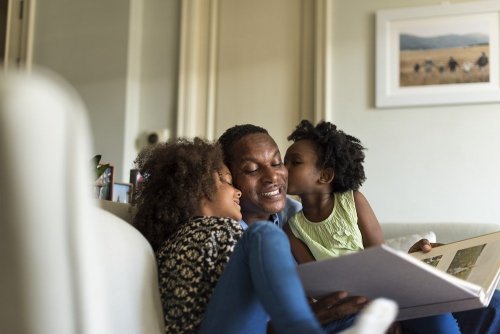
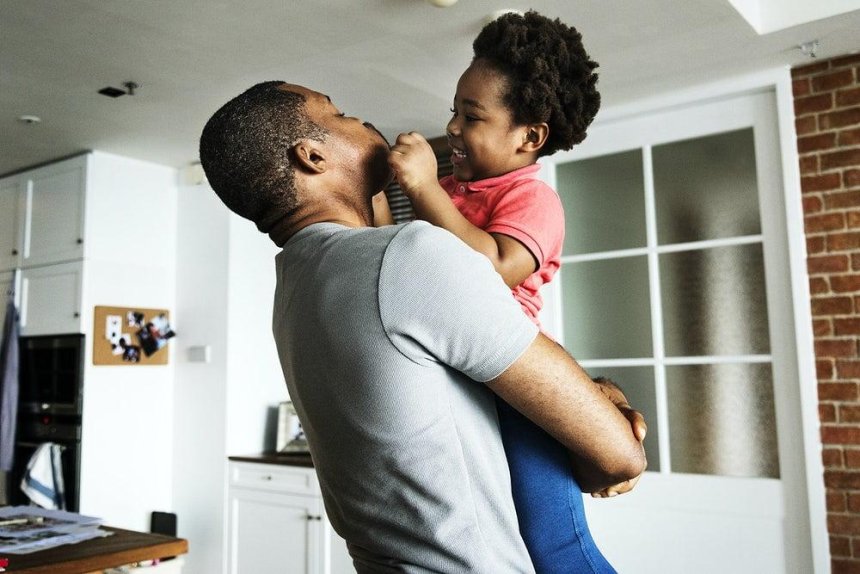
I have a fondness for kids, especially those just learning to walk. So, when my girls reached that stage, I took charge of their care. I changed their diapers, fed them, read to them, and played with them while my wife managed other responsibilities. In the mornings, while she prepared their school meals, I would wake them up, bathe them, and dress them for school. I drove them to school and picked them up afterward.
The kids became accustomed to me.
They wouldn’t let their mom do anything for them. When they cried, they ran to me for comfort. When they were hungry, I was their go-to. If I wasn’t home, they would ask about me and stay awake until I returned, knowing I’d bring them gifts from town. I thought nothing was wrong with our dynamic. Unbeknownst to me, my wife was feeling uneasy. Instead of addressing it directly, she made insinuations: “You’ve taken my kids from me.” “Do these kids even know I’m their mother?” “I’m convinced these kids dislike me.”
I found it amusing until one morning when she approached me and said, “Hey, I’m pregnant.” “Pregnant? How? How is that possible? You’re off family planning?”
“No, I’m not. I had it removed a while ago because I wanted to get pregnant again.”
“And you didn’t mention this to me? Not a word? What happened to our plan for two kids?”
“These two kids are yours. Clearly, they don’t like me. I want my own—a child who will come to me when he cries.”
“Are you serious? Please tell me you’re joking. They’re just kids, only three and four years old. They don’t even understand what’s happening, so why take it seriously?”
“They know what they’re doing. I’ve learned that girls tend to love their fathers, so I’m not surprised. I hope this one is a boy so he’ll grow to like me.”
She wasn’t making sense to me, but the smirk on her face indicated she was serious. Concerned she might develop resentment towards the kids, I suggested she take charge of their care moving forward to help them bond. She tried, but her issue was that whenever one of them resisted, she would back off and call me to handle it. “Dear, it doesn’t work that way. They’re your kids. Be firm if you want to connect with them; right now, it seems like you’ve given up.” She would respond, “They are yours. Mine will be coming soon.”
After an ultrasound, she learned the baby was a boy. That day was chaotic at home. She sang and danced around as if she had won the lottery. From that point on, it felt like it was us and them—me and the girls against her and the unborn baby. When the kids cried or screamed, she would scold them, telling them to be quiet so they wouldn’t disturb her child—the one in her womb. She treated her own children like outcasts, unable to connect with them.
“Maybe she’s depressed; you should consider finding her a therapist,” a friend suggested. I attempted to seek counseling together, but she told me to leave her alone. “So you think I’m crazy? You and your kids won’t drive me mad. I’m perfectly sane. Just wait until my child arrives, and you’ll see the difference.”
“Her child.” No longer OUR child.
I reported the situation to her parents. They called us in for a lengthy discussion. When we returned home that day, things worsened. The kids began to shrink away whenever they saw their mother. If they were playing and she walked by, they would stop and fall silent until she left. I, too, started feeling uneasy around her. Our conversations dwindled, and the joy we once shared was drained by her attitude. She preferred talking to the baby in her belly over engaging with us.
That night, while I was in the bedroom with the kids helping them with their homework, I heard her screaming from the hallway. I rushed out to find her lying on the floor, screaming. “Darling, what happened?” She couldn’t respond, only continued to scream and wave her hands in the air. I lifted her into the car, and the kids followed. That’s when I noticed she was bleeding. I rushed her to the hospital. The nurses asked what was wrong, but she still couldn’t speak. The pregnancy was a little over eight months along. They quickly took her to surgery, and an hour later, they returned to tell me, “We managed to save the baby…”
I smiled and said, “Thank God.”
The nurses looked at me as if I didn’t understand the gravity of the situation. Their faces were pale and somber. The eldest among them said gently, “Your wife didn’t make it.”
“What do you mean she didn’t make it? She has to! Just an hour ago, I brought her here, strong and screaming. Why couldn’t she make it?” The woman took my hand and led me to her office, the kids trailing behind. She said, “Your wife had a severe fall; why didn’t you tell us?” “A severe fall? How? Where?” I was so lost that I didn’t know what to say or do. I looked at my girls’ faces and began to cry. They, too, started crying. I don’t know what prompted their tears, but they cried nonetheless.
When I called my father-in-law, I struggled to find the words. I simply said, “We’re at the hospital; please come with mom.” An hour later, they arrived and saw my tear-streaked face. They understood and began to cry as well. They asked how and why, but I had no answers other than repeating what the nurse had said: “She had a severe fall.” They went to see the baby, and we returned home. I couldn’t bear to look at the baby, knowing he was the reason my wife had died. I struggled to accept him. The pain in my heart was overwhelming; I needed time to process it all.
When I got home, I surveyed the house. One of my wife’s slippers was under the sofa, and the other was behind it. I checked the carpet and noticed where she might have tripped. It was very likely she stumbled at the edge of the carpet. Just hours ago, she had been full of life, and now she was gone. How fragile is life?
We buried her shortly after, and the kids went to stay with her parents, including the little boy. I made sure not a day went by without seeing them. I sent them gifts and love. The boy looks so much like me, which fills my heart with joy. I couldn’t look at him that day, but now he has become my pride and strength. When I see him, I remember my wife, but not with sadness. It wasn’t his fault that she died. Everything happens for a reason. I don’t know the reason yet, but I believe it’s for the best. She gave me three children, and that’s a blessing that will sustain me for the rest of my days.
—Mensah,
Please SHARE this story. Someone in your network may need it.
Do you have any relationship experiences to share? Email them to editors@etechx.co.ke
Like our Facebook page to stay updated on new posts.
What's Your Reaction?
 Like
0
Like
0
 Dislike
0
Dislike
0
 Love
1
Love
1
 Funny
0
Funny
0
 Angry
0
Angry
0
 Sad
0
Sad
0
 Wow
0
Wow
0