The Secret She Took Beyond The Grave
A husband loses his wife unexpectedly and discovers a shocking secret after her death. Struggling with betrayal, grief, and painful DNA results, he learns that forgiveness may be the only path to healing and peace.

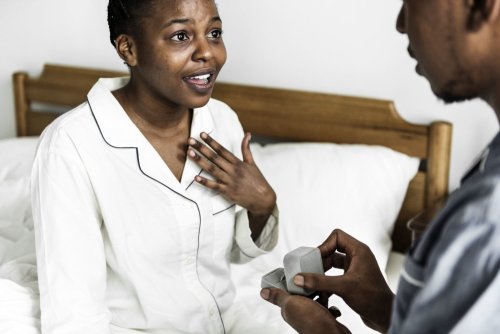
My wife and I had grand aspirations when our love was fresh. We envisioned creating a business where she would be the leader and I would be her right-hand man. In our dreams, we imagined a lovely home filled with children who would bring us endless joy. The only point of contention was the number of children that constituted a “full house.” She believed six was the magic number, while I thought two would suffice. With a dreamy smile, she even specified, “Three boys and three girls.”
We welcomed our first child, a boy named Hector, when our marriage was just a year and a half old. She affectionately called him “Buba” because of his cheerful nature. Two years later, Amanda arrived, but her pregnancy and delivery were fraught with complications. It was a harrowing experience for her, and at one point, she nearly lost her life. After that, we agreed that our definition of a “full house” would be one that included just Ama and Buba. We decided to close the chapter on having more children, and I underwent a vasectomy to prevent any surprises.
With a beautiful wife, two wonderful kids, and a place we could call home, life felt perfect. All that remained was to embark on our entrepreneurial journey. She was eager to take the reins, and I was excited to support her ascent.
During an Easter visit to my parents, I received a call from an unfamiliar voice: “Sir, your wife has been admitted to the intensive care unit at [hospital name]. She’s currently responding to treatment, but we need you here to sign some documents.” Confused, I asked who was calling and what had happened. “I spoke to her just last night, and she was in great spirits,” I replied.
That evening, I rushed to the hospital and found my wife in a hospital bed, a mask covering her face. Her condition appeared dire. The doctor informed me, “Your wife attempted an abortion using a dangerous drug. She was brought in quite late. The drug caused significant damage, but we are doing our best.”
I was stunned. “You said she attempted what? Suicide?” He clarified, “She attempted an abortion, and it didn’t go as planned.”
“My wife? An abortion?”
A whirlwind of emotions engulfed me. Should I be worried? Should I be angry? I was at a loss for how to feel, but I longed for her recovery so she could explain how she ended up pregnant. The following morning, I received the most devastating news: “Your wife didn’t make it.”
As a child, my grandfather told me a story about a man who died just before revealing to his children the location of the family treasure. The tale haunted me. I often wondered, “How could he wait until his last moment to share such vital information?” I felt for those children, destined to live their lives in ignorance of their fortune.
When I learned of my wife’s death, I wept uncontrollably. Just moments before, she had been my rock, the embodiment of my dreams. Now, she was gone—just when she had something important to share. I knew my wife well; she must have had her reasons, or perhaps the doctor was mistaken. Even if it were true, we would have fought, gotten angry, and threatened each other, but ultimately, we would have reconciled. What we had built over the years was stronger than a single act of betrayal.
I never got to hear her side of the story. To make matters worse, her family blamed me for her death, claiming, “A man like you can’t handle a third child, so you drove your wife to her demise.” I tried to explain, “You don’t understand, and nothing I say will change your minds.”
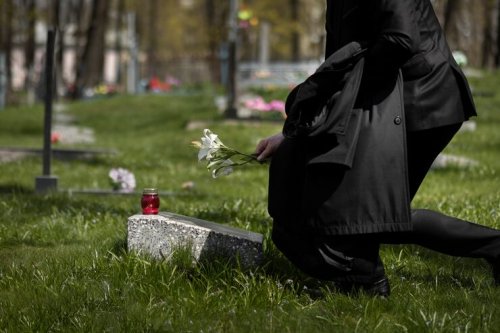
Weeks later, her family held a viewing for friends and relatives to pay their respects. As her husband, I should have been the first to see her, but I couldn’t bring myself to do it. I feared what I might say, so I chose to stay away. The last image I have of her is from that day when her body was lowered into the ground. I whispered, “So you’re leaving without telling me anything? Who got you pregnant? Why didn’t you say anything?”
Tears streamed down my face, cold and heavy, as if they were flowing from a deep part of my soul. They weren’t ordinary tears. We bid our farewells, and I left my ring on her coffin as I walked away from the cemetery.
I was haunted by her memory. Every day, I thought of her. Amanda bore a striking resemblance to her mother, making it difficult for me to look at my own daughter. One morning, a troubling thought crossed my mind: “How long had she been involved with the man who got her pregnant? Could he be the real father of my children?”
I decided to take a DNA test. Some days, I felt ready to go through with it, while other days, fear gripped me. “If the results show these kids aren’t mine, I’ll end my life,” I thought. I didn’t want to die, nor did I want to know the truth. But the thought lingered until one day, I finally made the decision.
Amanda was mine. Buba wasn’t.
Jesus Christ!
“Buba was our first. How could this be?”
They say alcohol numbs the pain, but no amount of drinking could erase my suffering. I felt like a ghost of my former self. People remarked that I was taking my wife’s death too hard, unaware of the deeper turmoil I was facing.
One night, while the kids slept, I hung a rope and contemplated how easy it would be to end my suffering once and for all. But, as you know, I didn’t go through with it, or you wouldn’t be reading this story.
I lay on the cold floor, staring at the rope. That night, I fell into a deep sleep, the first restful slumber I’d had since my wife’s passing. When I awoke, a strange sensation washed over me, as if a weight had been lifted. I realized I needed a good night’s sleep, not the eternal kind.
The next morning, I went to work and headed straight to my boss’s office. She’s someone I’ve always trusted. I poured out my heart, crying freely. She comforted me, saying, “Cry, but not too loudly, or your colleagues will hear.” I cried again and again.
She said, “Your wife wronged you deeply. It’s especially hard because you didn’t get closure. But she’s gone now. She would have apologized if she could. You might have forgiven her if she had. The apology didn’t come, but please accept it. Forgive her and be grateful for the beautiful children she gave you. Buba is yours. He calls you father. Forget about what the DNA says. What you believe to be true is the truth. Buba is yours, and that’s what matters.”
My boss became my source of healing. She checked on me daily to ensure I was okay. “Keep this to yourself,” she advised. “If it spreads, you’ll have to bear the shame. Live your life as it comes.” Life wasn’t easy, especially facing Buba every day while grappling with the thought that he might not be mine.
But I persevered. I realized that the only way to revive warmth in my life was to forgive and move forward. It hasn’t been easy; the memories linger, but I understand they are just that—memories. They don’t have to dictate my life. Buba is mine. Amanda is mine.
—Buba’s Father,
Please SHARE this story. Someone in your network may need it.
Do you have a relationship experience to share? Email it to editors@etechx.co.ke
Like our Facebook page to stay updated on new posts.
What's Your Reaction?
 Like
0
Like
0
 Dislike
0
Dislike
0
 Love
0
Love
0
 Funny
0
Funny
0
 Angry
0
Angry
0
 Sad
0
Sad
0
 Wow
0
Wow
0